If you work in open source, you know the word “ecosystem” is not just jargon. The best open-source projects are thriving, collaborative ecosystems where diverse contributors come together, each doing their own thing, and somehow build something far richer than any one of them could alone.
Kangaroo Island, off the coast of South Australia, is that same idea in its original, natural form. It is one of the planet’s great living ecosystems, a wildlife sanctuary so abundant the animals practically outnumber the people. About a third of the island is protected wilderness, home to wild sea lions, koalas, kangaroos, and creatures found nowhere else, all doing their thing across pristine bush, dramatic cliffs, and empty beaches. For a screen-weary developer, it is the perfect place to close the laptop and step into the ecosystem that inspired the metaphor.
How you experience it depends on whether you are chasing wildlife, wild landscapes, or local flavour. The island is bigger than people expect, so a little planning goes a long way.
A few things make a trip go smoothly. Go with reputable, ranger-guided operators for the wildlife, keep groups small, and give yourself enough time. Here are the best ways to experience it, ranked.
1. Compare and Book It All in One Place
Kangaroo Island offers day trips and multi-day tours, reached by ferry or a short flight from Adelaide, with wildlife, national parks, and food experiences spread across a large island. Sorting that from home, and deciding between a rushed day and a proper stay, is genuinely tricky. Kangaroo Island Australia Tours is a platform built around this destination, so instead of guessing you get the options laid out clearly by length, focus, and what each includes.
The value is that it matches the trip to your time and interests, and handles the logistics like ferries, distances, and ranger-guided access. You can weigh a big day trip from Adelaide against a relaxed two or three day exploration, and book trustworthy local guides.
You can compare Kangaroo Island tours here and plan a well-paced trip before you go, which matters given how spread out the island is.
Best for anyone who wants a sorted trip without the logistics headache. If you already know your plan, book directly.
2. Meet the Locals: Kangaroo Island’s Wildlife
This is the reason to come. At Seal Bay Conservation Park you can walk the beach with a National Parks ranger among a wild colony of around 800 endangered Australian sea lions, one of the most extraordinary wildlife encounters in the country, as they doze on the sand right beside you. Elsewhere on the island, koalas doze in the treetops, kangaroos and wallabies graze in the open, echidnas shuffle through the bush, and the Raptor Domain puts on a superb birds-of-prey display.
It genuinely feels like a nature documentary you are walking through, with a density and variety of wildlife that is rare anywhere on Earth.
One note: guided beach access at Seal Bay is occasionally adjusted to a boardwalk-only experience to protect the colony, so check the current arrangements when you book.
Best for wildlife lovers and anyone who wants animals in their natural habitat, not a zoo.
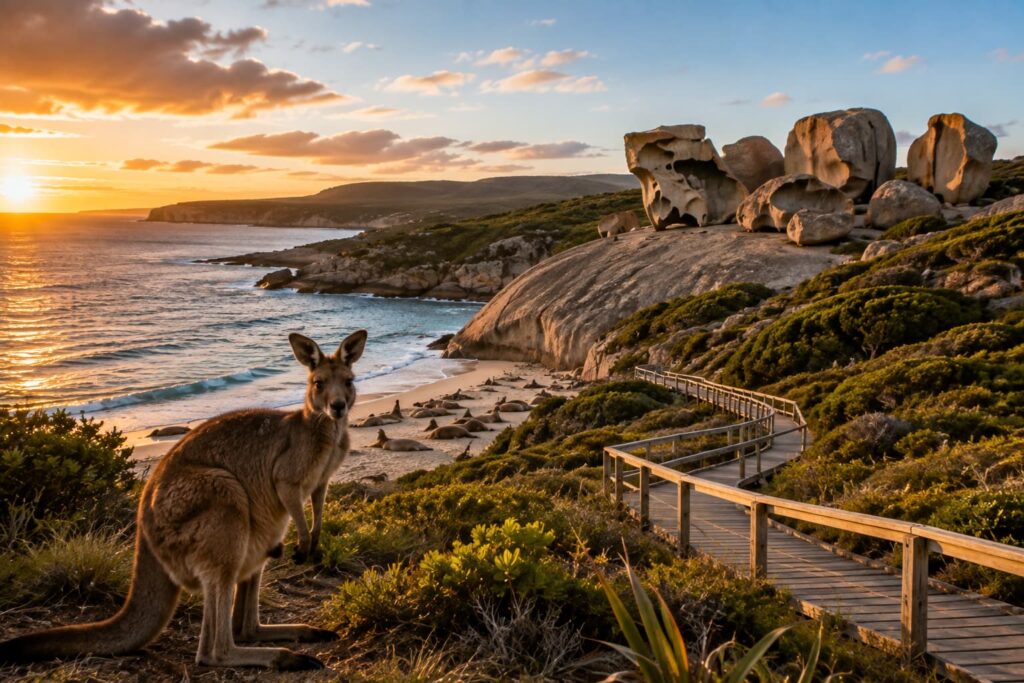
3. Flinders Chase: Remarkable Rocks and Admirals Arch
The island’s wild southwest is pure drama. In Flinders Chase National Park, the Remarkable Rocks are a cluster of enormous granite boulders sculpted by 500 million years of wind and sea into surreal shapes, perched on a dome above the crashing Southern Ocean. Nearby, a boardwalk winds down a cliff to Admirals Arch, a spectacular natural rock archway that shelters a colony of playful long-nosed fur seals.
These are the island’s signature landscapes, endlessly photogenic and genuinely awe-inspiring. It is worth knowing that this area was hit hard by bushfires a few years back, and watching the bush regenerate is its own quiet lesson in how resilient a healthy ecosystem can be.
The coast here is exposed and wild, so dress for wind and keep to the boardwalks.
Best for landscape lovers and photographers who want the island’s most iconic scenery.
4. Taste of the Island: Honey, Wine and Local Produce
Kangaroo Island is a serious food destination, with a twist. It is the world’s only sanctuary of pure Ligurian bees, so the honey here is unlike any other, and a visit to a honey farm is a genuine highlight. Add coastal wineries, the local KI Spirits gin, a eucalyptus oil distillery, and fresh-off-the-boat oysters, and you have a tasting trail worth building a day around.
This is the island’s slower, more indulgent side, showcasing just how much a small, clean, isolated place can produce. The isolation that protects the wildlife also keeps the food pure and distinctive.
Tastings are spread across the island, so pair them with a guided tour or a car and a designated driver.
Best for food-and-drink lovers who want to taste somewhere truly one of a kind.
5. Beaches and the Wild Coast
For sun, sand, and a bit of adventure, the island’s coast delivers. Little Sahara is a surreal expanse of white sand dunes where you can sandboard or ride a dune buggy, while beaches like Vivonne Bay and the hidden, boulder-framed Stokes Bay offer pristine swimming with barely another soul in sight. For something special, a marine safari lets you swim with wild dolphins and seals in crystal-clear water, and after dark the island’s dark skies deliver spectacular stargazing.
This is the relaxed, playful side of Kangaroo Island, and a lovely counterpoint to the wildlife and landscapes.
Some beaches are remote with no facilities, so come prepared and check conditions before swimming.
Best for beach lovers and anyone wanting a bit of coastal adventure.
A Few Practical Things Before You Go
Plan your access and your time. Kangaroo Island is a 30-minute flight from Adelaide, or a 1.5-hour drive to Cape Jervis followed by a scenic 45-minute ferry. A day trip from Adelaide is doable but means a very long day with a lot of travel, so a two or three day stay is far more rewarding and lets you slow down.
The island rewards visitors year-round. Summer brings warm beach weather, spring brings wildflowers and baby animals, and winter is prime time for spotting southern right whales off the coast. The island is large, so a car or a guided tour is essential for getting between the far-flung highlights, and wildlife is best seen early and late in the day.
For planning, the official South Australia tourism site is a great resource, and (Parks SA)[https://www.parks.sa.gov.au/] has the details on Flinders Chase and Seal Bay. Both pair well with any related travel guides already on the site.
Choosing the Right One for You
Kangaroo Island rewards travelers who match the trip to what they love.
Start by comparing your options through Kangaroo Island Australia Tours so you sort the ferry, distances, and ranger-guided access. Here for the animals, prioritize Seal Bay and the island’s wildlife. Drawn to landscapes, make for the Remarkable Rocks and Admirals Arch. A foodie, follow the honey, wine, and oyster trail. Craving the coast, hit the dunes and hidden beaches.
However you do it, this is one of the most complete natural ecosystems you can simply walk into. Log off, fly south, and spend a few days among creatures and landscapes that have been quietly thriving, uninterrupted, for millions of years. Some ecosystems are best experienced firsthand.
Author note: recommendations here are based on Kangaroo Island’s established tours and reputable operators. Prices, seasonal conditions, and wildlife access arrangements change, so confirm the current details before you go.